Indian community celebrates key harvest festivals
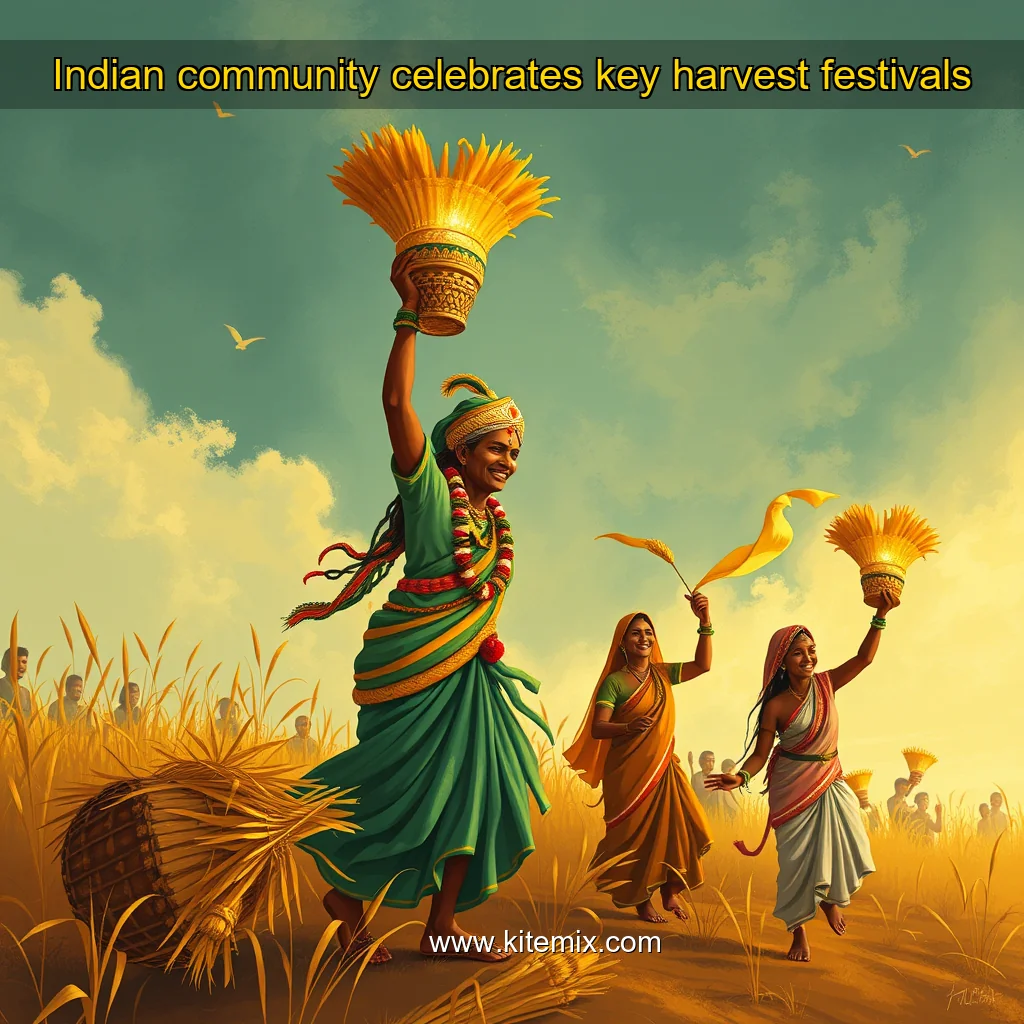
The festival is celebrated with great enthusiasm and fervor by the people of India and Nepal.
The Significance of Makar Sankranti
Makar Sankranti is a significant festival in Hinduism, celebrated to mark the beginning of the sun’s journey towards the northern hemisphere. This festival is also known as the “Harvest Festival” due to its association with the harvest season.
The Mythological Significance
According to Hindu mythology, the festival is associated with the story of the sun god Surya. The story goes that Surya was traveling in his chariot across the sky when he got stuck in the Tropic of Cancer. The gods and goddesses of the universe decided to help him by creating a path for him to move towards the northern hemisphere.
Kite flying is a popular pastime in these regions, with many people flying kites during the winter months.
The History of Kite Flying in India
Kite flying has a rich history in India, dating back to the Mughal Empire. The sport was popularized by the Mughal emperors, who used kites as a symbol of their power and wealth. The Mughal emperors would often hold kite-flying competitions, which were considered a prestigious event. The sport was also influenced by the ancient Indian tradition of “manjha,” which involved flying kites made of paper and string. The modern kite, made of lightweight materials such as plastic and nylon, was introduced in the 19th century. Kite flying became a popular pastime in India during the British colonial era, when it was introduced by British soldiers.
Types of Kites
There are several types of kites that are popular in India, including:
Kite Flying Competitions
Kite flying competitions are a popular event in India, with many people participating in local and national competitions.
The History of Kite Flying in India
Kite flying has been an integral part of Indian culture for centuries. The sport has its roots in the ancient Indian tradition of flying kites made from silk and paper. The word “kite” is derived from the Hindi word “khet,” which means “field” or “open space.” In the past, kites were flown for entertainment and as a form of competition.
The Evolution of Kite Flying in India
Over time, kite flying has evolved and become an integral part of Indian festivals and celebrations. The sport has been influenced by various cultures, including the Mughal Empire and the British. The Mughal Empire introduced the concept of kite flying as a form of entertainment, while the British introduced the use of kites made from plastic and other materials. Key milestones in the evolution of kite flying in India: + 18th century: Kite flying becomes a popular form of entertainment in India. + 19th century: The Mughal Empire introduces kite flying as a form of competition. + 20th century: The British introduce kites made from plastic and other materials.
The International Kite Festival in Ahmedabad
The International Kite Festival in Ahmedabad has been a major event in the world of kite flying. The festival has been held since 1989 and attracts kite enthusiasts from all over the world. The competition is fierce, with participants flying kites made from a variety of materials, including silk, paper, and plastic.
The event was organized by the Avondale Community Development Association (ACDA) in collaboration with the Avondale City Council.
The Avondale Community Development Association (ACDA) and the Avondale City Council
The ACDA is a non-profit organization that aims to promote community development and social welfare in Avondale. The organization has been working tirelessly to bring people together and create opportunities for social interaction and cultural exchange. The collaboration with the Avondale City Council has enabled the ACDA to leverage the council’s resources and expertise to deliver large-scale events like the one held at Eastdale Reserve.
The Event: A Celebration of Community
The event was a resounding success, attracting thousands of people from all walks of life. The atmosphere was electric, with people of all ages and backgrounds coming together to enjoy the various activities on offer.
He found a small Indian restaurant in the neighborhood that served authentic Gujarati cuisine. He was thrilled to taste the flavors of his homeland in a foreign land.
The Experience of Immigrants in New Zealand
New Zealand is a country with a diverse population, and immigrants play a significant role in shaping its culture. Many immigrants come to New Zealand seeking better economic opportunities, education, or a more relaxed lifestyle.
Auckland Celebrations
The Auckland celebrations kicked off with a grand opening ceremony at Barry Curtis Park, which was attended by over 5,000 people. The event featured a traditional Indian dance performance, a cultural show, and a display of Indian handicrafts. The highlight of the event was the lighting of the Lohri bonfire, which symbolizes the victory of good over evil. Key highlights of the Auckland celebrations:
- • Traditional Indian dance performance
- • Cultural show
- • Display of Indian handicrafts
- • Lighting of the Lohri bonfire
- • Traditional Indian dance performance
- • Cultural show
- • Display of Indian handicrafts
- • Distribution of traditional Indian sweets and snacks
Rotorua Celebrations
The Hindu Heritage Centre in Rotorua hosted a Makar Sankranti celebration on 12 January, which was attended by over 1,000 people. The highlight of the event was the distribution of traditional Indian sweets and snacks to the attendees. Key highlights of the Rotorua celebrations:
Cultural Significance
Lohri is a significant festival in Indian culture, celebrated on the 13th day of the Hindu month of Magha. It marks the beginning of the sun’s journey towards the northern hemisphere and is associated with the victory of good over evil. The festival is also celebrated in other parts of the world, including the United States, Canada, and Australia.
Conclusion
The Lohri celebrations in Auckland and Rotorua were a huge success, with over 6,000 people attending the events.
The event was attended by over 5,000 people, including Telugu-speaking communities from Auckland and surrounding regions.
The Significance of Sankranthi
Sankranthi is a significant festival in the Telugu calendar, marking the beginning of the harvest season. It is celebrated with great fervour and enthusiasm across the globe, particularly in countries with significant Telugu-speaking populations.
Pongal Celebrations in Auckland
The Pongal festival is a significant event in the Tamil calendar, marking the end of the harvest season. It is a time for celebration, gratitude, and renewal, and is observed by Tamils around the world.