
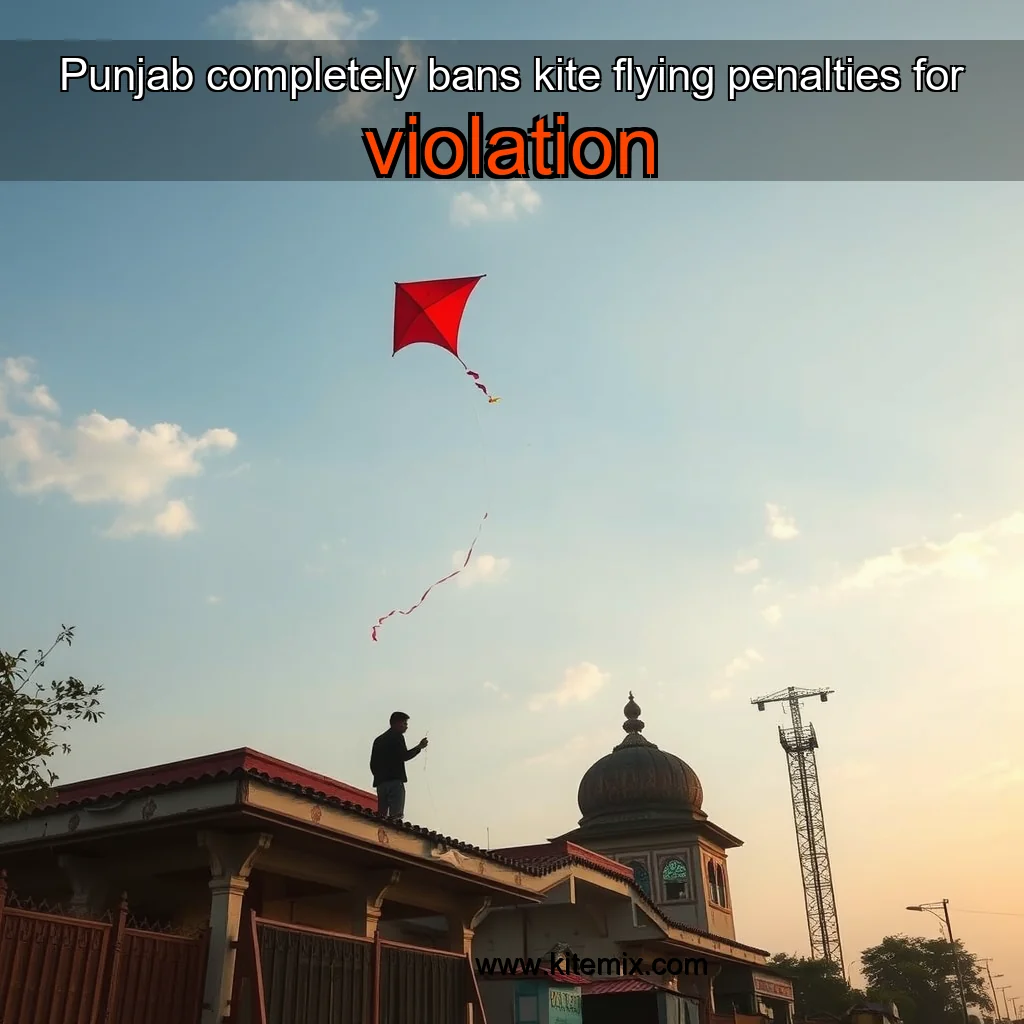
Punjab bans kite flying due to safety and environmental concerns.
The Background of the Decision
The decision to ban kite flying in Punjab was not taken lightly. The government has been grappling with the issue of kite flying for several years, with reports of injuries and fatalities due to kite flying accidents. The government has also been concerned about the environmental impact of kite flying, particularly in rural areas where the flying of kites can lead to the destruction of crops and trees.
The Concerns Surrounding Kite Flying
The New Law
The Punjab Prohibition of Kite Flying Amendment Act 2024 has been passed, which declares kite flying a non-bailable offense throughout the province. The law comes into effect immediately, and those found guilty of kite flying will face severe penalties, including fines and imprisonment.
The Penalties for Kite Flying
In other parts of the India, the punishment varies from state to state. The law is based on the Indian Penal Code (IPC) and the Aircraft Act of 1934. The law prohibits the use of drones for any purpose other than recreational flying, including aerial photography and videography, unless the drone is registered and the pilot has a valid license.
The Drone Law in India: A Comprehensive Overview
Introduction
The Indian government has introduced a new law to regulate the use of drones in the country. The law, which is based on the Indian Penal Code (IPC) and the Aircraft Act of 1934, aims to ensure public safety and prevent the misuse of drones. In this article, we will delve into the details of the drone law in India and explore its implications for drone enthusiasts and businesses.