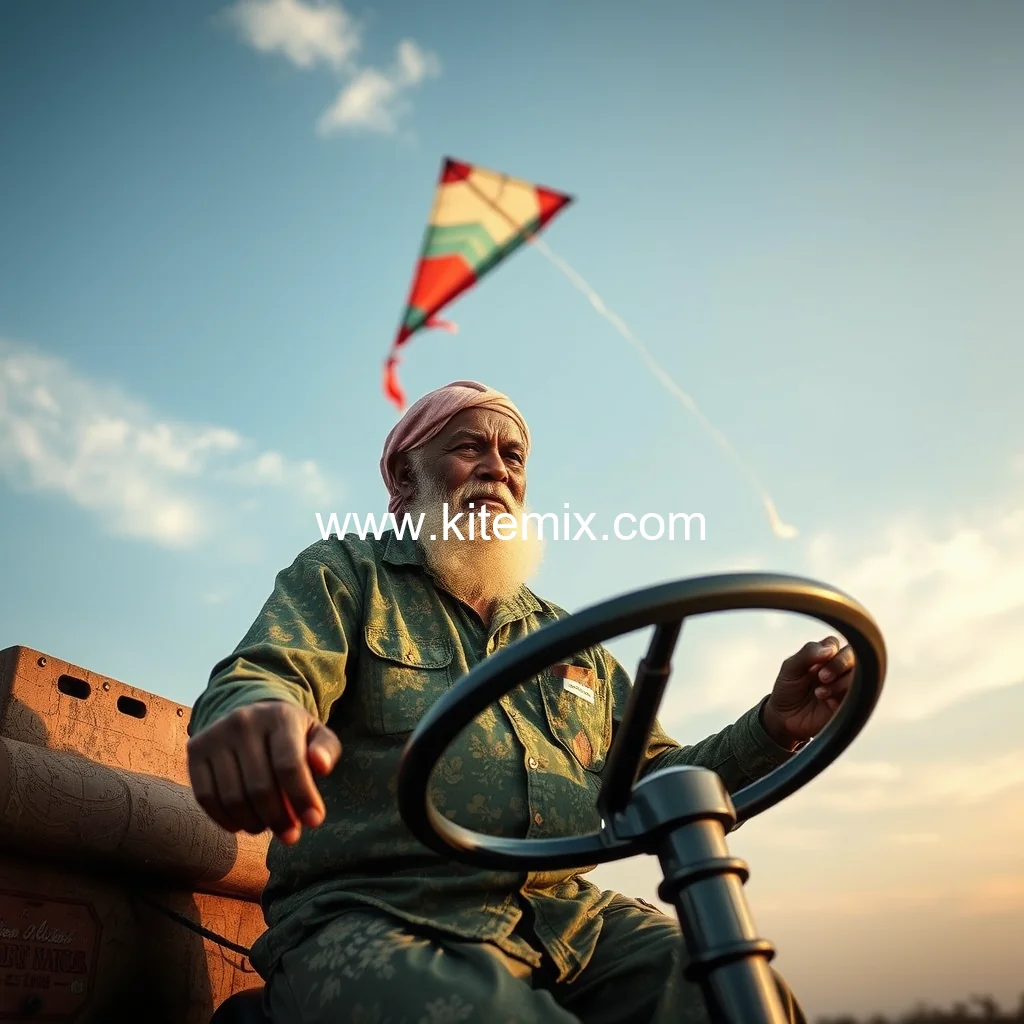
He has been a fixture at the barrage for over 20 years, and his presence is a welcome sight for many. He has been known to bring his own kites, and even set up a makeshift stall to sell his wares.
A Life of Kites and Community
Mr Tan Poh Wah’s love affair with kites began when he was just a young boy. He grew up in a family of kite enthusiasts, and his parents encouraged his interest in the sport. As he grew older, his passion for kites only intensified, and he began to experiment with different designs and materials.
The Art of Kite-Making
Mr Tan Poh Wah is a master kite-maker, and his creations are highly sought after by kite enthusiasts. He uses a variety of materials, including silk, nylon, and wood, to craft his kites. His kites are not only beautiful but also incredibly durable, with some lasting for years.
Transforming Trash into Treasure, One Piece at a Time.
The Art of Upcycling
Mr Tan’s art is a testament to the power of creativity and innovation in the face of environmental degradation. By transforming discarded materials into stunning works of art, he challenges the conventional notion of waste and beauty. His art not only raises awareness about the importance of sustainability but also inspires viewers to rethink their relationship with the environment.
The Materials
Mr Tan’s art is characterized by its use of recycled materials, which are often sourced from local waste management facilities. Some of the materials he uses include:
These materials are often combined in innovative ways to create complex and visually striking compositions. Mr Tan’s use of recycled materials not only reduces waste but also highlights the potential for creativity and beauty in everyday objects.
The Process
The process of creating Mr Tan’s art is often as fascinating as the final product. He typically begins by collecting and sorting the materials, which can be a time-consuming and labor-intensive process. Once he has gathered the necessary materials, he will often spend hours or even days assembling and arranging them into a cohesive composition. Mr Tan’s process is often described as meditative, as he finds solace in the repetitive motion of collecting and arranging the materials. He has stated that he often listens to music or nature sounds while working on his art, which helps him to focus and get into a creative flow state.
The Origins of Singapore Original Kites
The group was formed in 2004, when the founder, Dr. Wong, was 65 years old. At that time, he was still working as a physician, but he had already started to think about retirement. Dr. Wong had a passion for kites, which he had learned to make and fly as a child. He had also noticed that many of his patients were suffering from depression and anxiety, and he believed that flying kites could be a therapeutic activity that could help alleviate these symptoms.
The Purpose of Singapore Original Kites
The primary purpose of Singapore Original Kites is to provide a social platform for adults in their 60s and 70s to share their passion for kites and to enjoy the benefits of flying kites. The group meets regularly to make and fly kites, and they also organize kite-flying competitions and other events. The group’s activities are designed to promote social interaction and community building among its members. The group’s activities are also designed to promote physical activity and mental well-being.
He drives his lorry from 6:00 AM to 6:00 PM, Monday to Friday, and from 8:00 AM to 8:00 PM on Saturday.
The Challenges of Working as a Lorry Driver
Mr Tan’s job as a lorry driver is physically demanding and requires long hours of driving, often in challenging weather conditions. He faces numerous challenges on the road, including:
The Importance of Rest and Relaxation
Despite the challenges of his job, Mr Tan emphasizes the importance of rest and relaxation for his physical and mental well-being. He believes that taking regular breaks and getting enough sleep is crucial for maintaining his energy levels and focus on the road. Taking regular breaks to stretch and move around
The Impact of Long Hours on Mental Health
Long hours of driving can take a toll on Mr Tan’s mental health, leading to feelings of burnout and stress.
He started with simple designs and gradually moved on to more complex ones. He has been flying kites for over 20 years now and has developed a unique style of flying that is both artistic and technical.
The Origins of Mr. Tan’s Kite Flying Passion
Mr. Tan’s love for kite flying began when he was just a child.
These kites are designed to be flown in open spaces, such as parks and beaches, where they can be safely inflated and flown without causing damage to property or injuring people.
The Rise of Inflatable Show Kites
In recent years, inflatable show kites have gained immense popularity among kite enthusiasts. These kites have become a staple at outdoor events and gatherings, particularly at East Coast Park in Singapore.
The Evolution of Kites
Kites have been a part of human culture for thousands of years, with evidence of their use dating back to ancient civilizations in Egypt, China, and Greece. Over time, kites have evolved to become more sophisticated and diverse, with various designs and materials used to create different types of kites.
Traditional Kites
Traditional kites are made with a rigid frame, typically made of wood or bamboo, which provides support and structure. The frame is usually covered with lightweight materials such as silk or nylon, and is often decorated with colorful designs and patterns. Traditional kites are often flown in open spaces, such as parks or beaches, and are typically flown by experienced kite enthusiasts.
Characteristics of Traditional Kites
Inflatable Show Kites
Inflatable show kites, on the other hand, have no hard structures. They inflate as they catch on the wind and have to be anchored to the ground.
In October, they visited the Netherlands, where they participated in the annual Windmill Festival, and in November, they flew a kite in the couple’s hometown of Singapore.
The Kite Festival Experience
Mr. Yap and Ms. Mok’s international kite festival journey began in September, where they showcased their skills in the form of a Merlion kite. The Merlion is a symbol of Singapore, and the couple’s kite was designed to resemble this iconic landmark. The festival was a great opportunity for them to share their passion for kite flying with a global audience. Key aspects of the Merlion kite:
- • Designed to resemble the Merlion, a symbol of Singapore
- •
The bespoke kites are designed to be flown in a variety of conditions, including windy and stormy weather. The kites are made from high-quality materials, such as carbon fiber and Kevlar, which provide exceptional strength and durability.
“We stick to the principle that we must design our own kites.” Source: CNA/jl/sf Also worth reading Content is loading…