
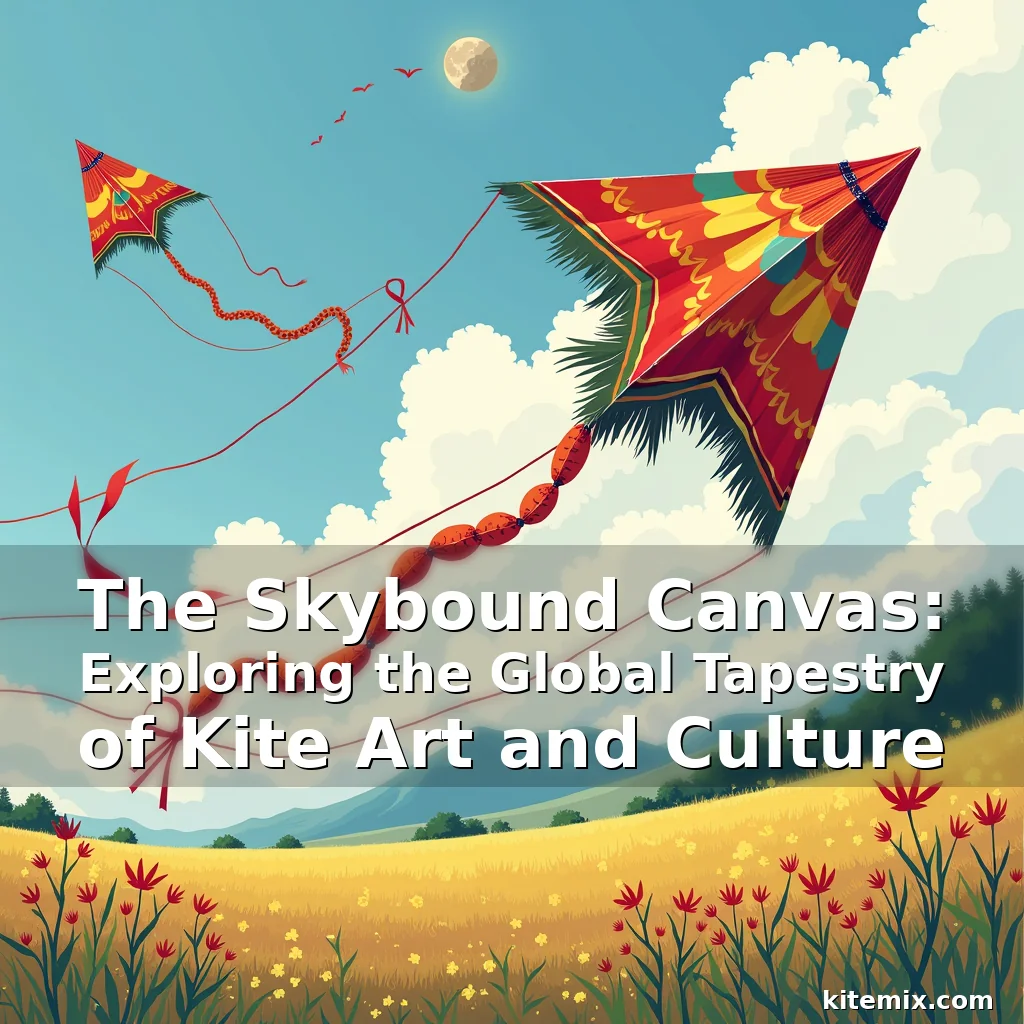
The Skybound Canvas: Exploring the Global Tapestry of Kite Art and Culture
Kite flying is an ancient art that transcends borders, uniting cultures through its elegant simplicity. From the vibrant festivals of India to the intricate designs of Japan’s washi kites, each region infuses its heritage into the strings and fabric of these airborne marvels.
This exploration delves into the rich history, artistic techniques, cultural significance, and modern innovations shaping kite traditions worldwide. Through this journey, we uncover how kites serve as both functional objects and profound expressions of human creativity across generations.
The Ancient Origins of Kite Artistry
Dating back over 2,800 years to ancient China, kites were initially crafted from bamboo and silk by scholars seeking to understand aerodynamics. These early kites played crucial roles in military applications such as measuring distances and signaling during battles.
Evidence suggests Emperor Qin Shi Huang commissioned giant kites to scare away his enemies before the construction of the Great Wall. This historical anecdote highlights kites’ dual role as practical tools and instruments of warfare strategy.
In Southeast Asia, indigenous communities developed distinct styles using palm leaves and rice paper. The Balinese ‘Ogoh-Ogoh’ festival showcases oversized ceremonial kites depicting mythical creatures with symbolic meanings tied to local folklore.
Cultural diffusion along trade routes spread kite-making skills globally. Arab traders introduced Persian-style kites to North Africa while Chinese artisans influenced Japanese design principles centuries later.
- Bamboo Framework: Traditional Asian kites often feature segmented bamboo structures that allow for precise shape control and durability against strong winds.
- Silk & Paper Materials: Early kites used lightweight natural fibers which evolved into modern synthetic materials without compromising traditional aesthetics.
Cultural Significance Across Civilizations
Kite flying holds deep spiritual meaning in many societies. In Hindu tradition, kites symbolize liberation from worldly attachments when released at festivals celebrating deities like Hanuman and Krishna.
The annual Makar Sankranti festival in northern India sees millions taking to the skies with elaborately decorated kites. This event marks the sun’s movement towards the Cancer constellation and has been celebrated since Vedic times.
In Korea, Taegeuk kites represent cosmic balance through their yin-yang patterns. During ancestral rites, these geometrically perfect kites are flown to honor deceased family members and ensure peaceful transitions to the afterlife.
Japanese Edo period kites incorporated ukiyo-e woodblock prints onto paper surfaces, creating portable works of art that depicted famous landscapes and historical figures.
Modern Revival of Traditional Practices
Contemporary artists blend old-world craftsmanship with digital technologies to create hybrid kites. For example, Indonesian master craftsman Iwan Setiawan uses laser-cutting techniques on traditional wayang kulit patterns to produce intricate shadow-effect kites.
According to UNESCO’s Intangible Cultural Heritage list, over 16 countries have recognized various forms of kite-making as vital components of national identity. This includes Thailand’s Khon kites used in royal ceremonies and Mexico’s papel picado banners.
The International Kite Festival in Gujarat attracts thousands annually, where artisan families demonstrate time-honored methods passed down through generations. Their signature ‘patang’ kites showcase vivid color contrasts and complex mathematical geometry.
New media platforms now enable global audiences to experience kite culture virtually. Google Arts & Culture features interactive exhibitions showcasing archival photographs and 3D models of rare historic kites.
Artistic Techniques and Design Principles
Mastering kite aerodynamics requires understanding lift, drag, and center of gravity calculations. Traditional builders use empirical knowledge refined through centuries of trial and error rather than formal physics equations.
The diamond-shaped ‘delta’ kite remains popular due to its stability in varying wind conditions. Its triangular form distributes weight evenly, allowing for smooth flight even in turbulent air currents.
For multi-cell kites, craftsmen precisely calculate internal bracing angles to maintain structural integrity while minimizing overall weight. This technique enables creation of larger kites without sacrificing maneuverability.
Paper tension plays a critical role in kite performance. Too tight and the material becomes brittle; too loose and the structure lacks rigidity. Skilled artisans develop a tactile sense for optimal tension through hands-on practice.
Materials Science in Kite Construction
Traditional materials like mulberry bark paper remain prized for their strength-to-weight ratio. However, modern composites offer enhanced durability while preserving aesthetic qualities essential for artistic expression.
Fiberglass rods provide superior flexibility compared to bamboo, enabling more dynamic flight characteristics. They also resist warping caused by humidity changes affecting natural materials.
Waterproof coatings protect delicate fabrics from moisture damage without obscuring visual elements. Modern UV-resistant varnishes preserve colors for extended outdoor exposure periods.
Biodegradable adhesives now replace toxic glues used in industrial production processes. This innovation aligns with sustainability goals while maintaining traditional crafting methods.
Community Engagement and Educational Value
Kite workshops serve as intergenerational learning experiences, connecting elders with youth through shared creative pursuits. These sessions pass down not only technical skills but also cultural narratives embedded in each design.
Urban centers host public flying events promoting social cohesion among diverse populations. Such gatherings foster cross-cultural exchanges as participants share techniques from different regional traditions.
Educators incorporate kite building into STEM curricula, teaching principles of aerodynamics, mathematics, and engineering through hands-on experimentation with physical prototypes.
Youth programs emphasize teamwork and problem-solving as students collaborate on group projects requiring coordinated effort and collective decision-making.
Preservation Efforts and Contemporary Challenges
Rapid urbanization threatens traditional kite-making practices as younger generations pursue alternative careers paths. Many rural artisans struggle to sustain livelihoods from what was once a thriving cottage industry.
Museums and cultural institutions play vital preservation roles by documenting endangered techniques through video archives and publishing scholarly articles analyzing historical evolution patterns.
Apprenticeship systems are being revived to address skill gaps created by declining numbers of professional instructors qualified to teach specialized craft methods.
Technological advancements present double-edged swords – while offering new creative possibilities, they risk diluting authentic cultural expressions if adopted uncritically without appreciation for their origins.
Future Directions in Kite Innovation
Smart kites equipped with GPS tracking devices open new avenues for aerial mapping and environmental monitoring applications. Researchers explore integrating solar panels for sustainable energy generation during long-duration flights.
Augmented reality integration allows spectators to see virtual overlays enhancing viewing experiences at festivals. Digital projections can animate static designs creating immersive storytelling environments.
Collaborations between engineers and traditional artisans yield innovative hybrids blending ancient wisdom with cutting-edge technology. These partnerships respect heritage while embracing progress responsibly.
Virtual reality simulations let enthusiasts practice complex maneuvers safely indoors before attempting them outdoors. This reduces risks associated with learning curve challenges inherent in real-world flight scenarios.
Conclusion
The enduring appeal of kite art lies in its ability to bridge past and future through continuous reinvention. As we’ve explored, every string pulled taut represents millennia of accumulated knowledge, creativity, and cultural exchange.
By supporting local artisans, participating in educational initiatives, and appreciating the stories behind each kite, we contribute to keeping this living tradition alive for future generations to enjoy under open skies.